Choosing between Roland TrueVIS TR2 Replacement Inks vs OEM ink isn’t just about price. It’s about reliability, warranty coverage, durability, and the long-term performance of your graphics. I run a print shop, and like many of you, I’ve wrestled with the decision of whether to stick with OEM Roland Ink designed for TrueVIS printers or explore third-party alternatives.
After years of printing wraps, banners, decals, and signage, I’ve learned there’s no universal answer. Some compatible inks perform surprisingly well. Others create more maintenance headaches than they’re worth. In this guide, I’ll break down what we’ve learned from hands-on testing, conversations with other print professionals, and real production experience so you can decide which option fits your workflow best.
Understanding Roland TrueVIS TR2 OEM Ink
Roland’s OEM TR2 ink is engineered specifically for TrueVIS printers and backed by strict quality standards. The formulation supports True Rich Color 2 profiles with dual CMYK plus light colours, delivering a wide colour gamut and smooth tonal gradations. In our shop, we consistently see sharp details, smooth gradients, and vibrant oranges that stand out even without lamination.
The ink is also virtually odourless and GREENGUARD Gold certified, which matters more than many people realize. For indoor graphics, retail environments, schools, and healthcare facilities, lower emissions can be a major selling point.
Durability is another huge advantage. Roland states that graphics produced with TR2 inks can last up to three years outdoors without lamination. That’s one of the biggest reasons we still rely on OEM ink for vehicle wraps and long-term outdoor signage.
OEM TR2 also maintains eligibility for programs like 3M™ MCS™ and Avery Dennison™ Integrated Component Systems™ warranties. That may sound minor until a customer experiences a failure on a large wrap project. Warranty support can save thousands of dollars in reprints and labour.
Finally, OEM pouches offer true plug-and-print simplicity. There’s no flushing process when changing colours, and prints are often ready for finishing in about six hours.
Exploring Roland TrueVIS TR2 Replacement Ink Options
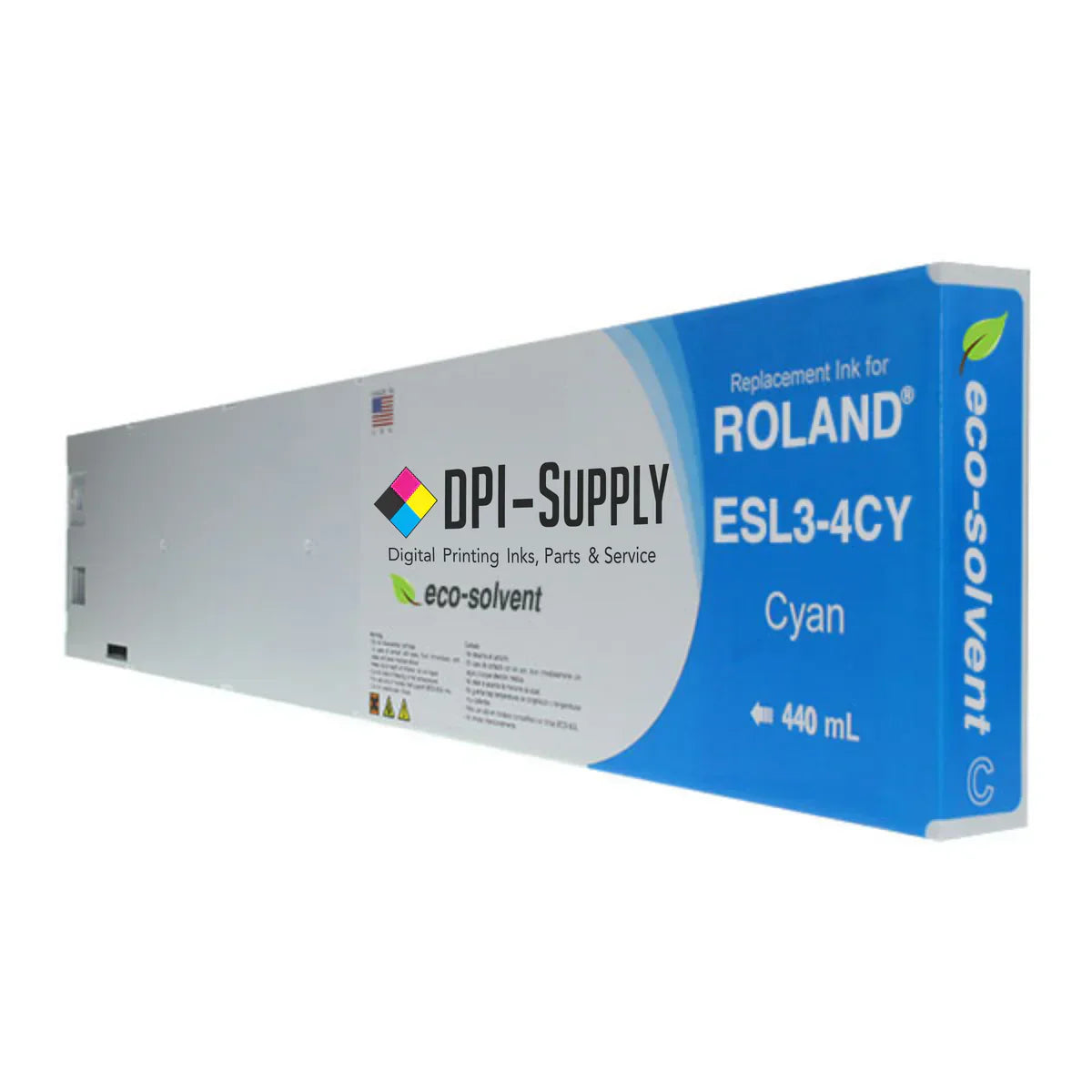
Third-party inks have improved dramatically over the last several years. Companies like Jetbest, DIGINK, 20/20 Color, and Nazdar now formulate products specifically designed to closely match Roland TrueVIS TR2 Replacement Ink chemistry.
Many of these inks are fully miscible with OEM TR2 ink, allowing shops to replace pouches gradually without flushing lines or rebuilding colour profiles. In production environments, that flexibility reduces downtime significantly.
Cost savings are the biggest reason shops explore compatible inks. Replacement pouches often cost 30–50% less than OEM alternatives, especially when purchased in bulk quantities. For high-volume print shops running banners, posters, decals, and promotional graphics every day, those savings add up quickly.
Nazdar’s 205 Series is one example often discussed in the industry because it allows direct replacement without creating custom ICC profiles while still maintaining solid colour stability. However, compatible inks usually offer 12–24 months of outdoor durability instead of the three-year benchmark associated with OEM TR2 ink.
For indoor graphics or laminated decals, that shorter lifespan may not matter much. But for unlaminated vehicle wraps exposed to harsh weather year-round, OEM durability still tends to win.

Are Non-OEM Ink Cartridges Any Good?
This question comes up constantly, and honestly, the answer depends entirely on the manufacturer.
High-quality third-party cartridges can absolutely produce strong results when engineered correctly. Some compatible inks include cleaning agents designed to help reduce nozzle clogging and maintenance issues. We’ve personally tested Jetbest pouches that delivered crisp lines and reliable colours after months of heavy production.
Still, not every compatible product performs at that level.
A study cited by HP found that 58% of refilled or remanufactured cartridges failed prematurely. Lower-quality off-brand inks can also produce:
- Banding
- Inconsistent colors
- Premature fading
- Poor adhesion
- Excessive maintenance cycles
That’s why supplier reputation matters so much. Always ask for print samples, durability information, and compatibility testing before committing to a large purchase.
What Is the Difference Between Genuine Ink and Compatible Ink?
Most Digital Printing Inks fall into two categories: genuine OEM products and compatible third-party alternatives.
OEM inks are engineered by the same company that manufactures the printer. Every part of the system — from droplet size to curing characteristics — is calibrated together for maximum consistency.
Compatible inks attempt to replicate that chemistry at a lower price point.
Some do a very good job.
Others don’t.
The primary differences typically involve:
- Outdoor durability
- Colour stability
- Warranty support
- Long-term consistency
- Scratch resistance
Some compatible inks require flushing the system and rebuilding ICC profiles. Others are truly plug-and-play and can be swapped directly with OEM pouches.
In many production environments, shops actually use a hybrid strategy. OEM ink stays in wrap printers while compatible inks run in banner or poster production machines where extreme outdoor longevity isn’t necessary.
Are Remanufactured Ink Cartridges as Good as Original?
Remanufactured cartridges are recycled OEM cartridges that have been cleaned, refilled, and resold. They appeal to environmentally conscious businesses because they reduce waste, but quality control can vary significantly.
Some perform perfectly fine. Others fail quickly.
With eco-solvent systems like Roland TrueVIS printers, inconsistency can become expensive fast. Poor seals, contamination, or inconsistent viscosity may lead to nozzle issues and downtime.
In our experience, remanufactured TR2 pouches are less common than newly manufactured compatible pouches. Most professional shops prefer new compatible systems because they provide more consistent chemistry and fewer reliability concerns.
If you decide to experiment with remanufactured products, work with a supplier that offers strong technical support and printhead protection guarantees.
Does High Yield Ink Last Longer?
Technically, high-yield ink doesn’t last longer because of different chemistry. It lasts longer because the cartridge or pouch simply contains more ink.
These larger-capacity systems help reduce interruptions and lower the cost per print.
Benefits of high-yield systems often include:
- Fewer cartridge changes
- Lower cost per milliliter
- Reduced production interruptions
- Less packaging waste
- Better efficiency for large print runs
For high-volume production environments, those workflow improvements can make a noticeable difference.
Cost Analysis: How Much Can You Save?
Ink expenses escalate quickly when printing hundreds of square meters every month.
Industry comparisons show OEM Roland ink in 220 ml pouches often costs around $80–$120 per cartridge, translating to roughly $0.36–$0.55 per ml. A standard 4'×8' banner at 30% coverage may use approximately $8–$15 worth of OEM ink.
By comparison, high-quality compatible pouches may cost $35–$60 for the same size, lowering the cost to roughly $0.16–$0.27 per ml. That same banner could cost only $4–$8 in ink.
For busy production shops, the savings become substantial.
In our own operation, switching one production printer to compatible ink saved well over $10,000 in a single year without noticeably impacting print quality on short-term graphics.
That said, we still run OEM TR2 ink on wrap printers because the added outdoor durability matters for those applications.
Simple Comparison of Ink Costs
| Ink Type | Typical Cost per 220 ml | Cost per ml | Cost for 4'×8' Banner* |
|---|---|---|---|
| Roland OEM TR2 | $80–$120 | $0.36–$0.55 | $8–$15 |
| High-quality Compatible | $35–$60 | $0.16–$0.27 | $4–$8 |
| Bulk Ink (1 L) | $120–$180 | $0.12–$0.18 | $3–$6 |
*Assumes 30% coverage and standard print settings.
Balancing Durability vs Savings
When deciding between Roland TrueVIS TR2 Replacement Inks and OEM ink, the biggest factor is usually application lifespan.
If you produce:
- Vehicle wraps
- Fleet graphics
- Exterior signage
- Long-term outdoor branding
OEM ink’s durability and warranty support are hard to replace.
On the other hand, if your shop primarily handles:
- Indoor banners
- Event signage
- Laminated decals
- Temporary promotions
- Posters
Compatible inks may provide significant savings without sacrificing noticeable quality.
Lower ink costs can also reduce waste and improve operational efficiency, which is increasingly important for environmentally conscious businesses.
Selecting the Right Ink for Your Business
Here’s how we usually recommend approaching the decision at DPI Supply:
Define Your Application
Long-term outdoor graphics generally justify OEM reliability. Short-term graphics often work perfectly well with compatible alternatives.
Test Before Committing
Request samples and run side-by-side comparisons on your actual media. Evaluate color consistency, scratch resistance, and adhesion.
Understand Warranty Implications
Using compatibles doesn’t automatically void your printer warranty, but damage caused by incompatible chemistry may not be covered.
Calculate True Operating Costs
Don’t focus only on cartridge pricing. Include maintenance cycles, downtime, wasted prints, and color correction time.
Stay Current
Ink formulations evolve constantly. Maintaining communication with trusted suppliers helps shops stay ahead of compatibility updates and performance improvements.
Final Thoughts

As someone printing wraps, decals, and banners every week, I’ve learned there’s no perfect answer to the Roland TrueVIS TR2 Replacement Ink versus OEM debate.
OEM TR2 ink still delivers unmatched durability, warranty protection, and long-term consistency for demanding applications. At the same time, high-quality compatible inks have become far more reliable than they were years ago and can dramatically reduce production costs for everyday graphics.
Ultimately, the right decision depends on:
- Your applications
- Your production volume
- Your budget
- Your tolerance for risk
The best shops usually aren’t blindly loyal to one side. They evaluate the job, test products carefully, and use the right ink for the right application.
For more insight into how ink chemistry impacts print quality and durability, check out Is DTF Ink the Same as Regular Inkjet Ink?.