Printing onto fabric used to mean choosing between screen printing and heat transfer vinyl. Direct‑to‑Film (DTF) printing has changed that landscape by letting crafters and professional printers produce vibrant designs on almost any fabric. At the heart of this technique is a specialized ink formulated to bond with a PET film and then transfer to the garment. In this guide, we'll explore what kind of ink is used for DTF, how it differs from other inks, and why it has quickly become a go‑to choice for apparel decorators.

Do you need special ink for DTF printing?
DTF printing is not simply a new name for existing inks. It relies on water‑based pigment formulations with binders and resins that make the ink stick to a carrier film and later to the fabric. These inks must flow smoothly through Epson‑based printheads like the DX5, DX7, XP600, 4720 or i3200, which have tiny nozzles designed for pigment dispersion. If you try to use a standard dye or solvent ink, the particles are either too small and bleed through the fabric or too thick and clog the nozzles. DTF ink is engineered to sit on top of the fabric and remain intact through heat pressing, which is why you need a special ink set rather than the universal cartridges sold for standard inkjet printers.
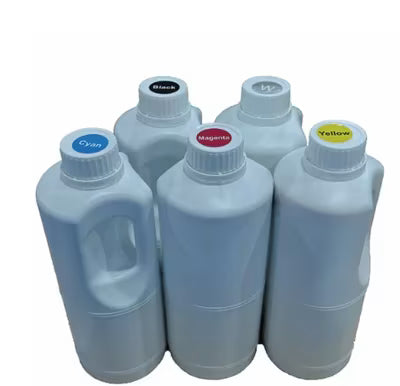
Another reason you need dedicated DTF ink is white ink. Dark shirts require a white underbase to make colors pop. In DTF, white ink uses titanium dioxide pigment and additional resins to increase opacity. Regular inks don’t include a white formulation at all, so they can’t provide the solid foundation needed for bright colors on dark garments. When shopping for supplies, look for DTF ink sets labelled CMYK + White. These sets ensure your printer has the full range of colors, and they contain the right viscosity to prevent clogs.
What type of ink is DTF ink?
DTF ink is water‑based pigment ink, not dye ink. Pigment particles sit on the surface of fabric rather than penetrating the fibers, which allows for vivid, opaque colors and long‑lasting designs. The ink mixture typically includes finely ground pigments, water, co‑solvents like glycol to control viscosity, polymer binders, and additives to keep pigments suspended. White DTF ink is heavier due to the high load of titanium dioxide and often needs circulation in the printer to prevent settling.
Water‑based pigments are also eco‑friendlier than solvent inks. They emit fewer volatile organic compounds (VOCs) and can be cleaned with water rather than harsh chemicals. If sustainability matters to your business, choosing DTF inks aligns with greener practices and customer expectations. Because the inks contain resins and polymers, they still adhere strongly to a wide variety of fabrics, from cotton and polyester to nylon and leather.
Ink composition and viscosity
The viscosity of DTF ink is a critical specification. Inks formulated for piezoelectric printheads must be thin enough (around 3–6 mPa·s) to jet through nozzles yet thick enough to carry pigment without dripping. Manufacturers achieve this by balancing water content with co‑solvents and adjusting pigment particle size to below one micron. High‑quality DTF inks undergo nano‑grinding or micro‑filtration so the pigments are fine and uniform. This precision prevents clogs and ensures smooth gradients in your prints.
Is sublimation ink the same as DTF ink?
No—sublimation ink and DTF ink serve different purposes. Sublimation printing uses dye‑sublimation inks that turn from a solid to a gas under heat, bonding at a molecular level with polyester fibers. Because the dye needs polyester to sublimate, it doesn’t work on cotton or other natural fibers. DTF inks, on the other hand, sit on top of the fabric and bond through a hot‑melt adhesive powder. The process prints onto a PET film, adds powder, cures it, and then heat‑presses the transfer onto any fabric. This means DTF can decorate cotton, polyester, blends, canvas, leather and more.

Sublimation does not require white ink, whereas DTF depends on white ink for opacity on dark garments.
Because sublimation inks chemically integrate with the fabric, they produce a softer hand and a no‑feel print. DTF prints have a slightly raised feel due to the adhesive layer but offer versatility across more fabrics. In summary, sublimation is best for bright designs on polyester, while DTF is ideal for printing multicolored or dark garments across many fabric types.
The Benefits of DTF Inks: Vibrant Colors, Durability, and Efficiency
One reason DTF has exploded in popularity is its vibrant color reproduction. The pigment‑based ink set produces saturated hues and crisp details on any material. White ink underneath ensures the overlying colors remain vivid even on dark fabrics. When properly cured and pressed, DTF prints can withstand dozens of wash cycles without cracking or fadin. This durability makes DTF ideal for workwear, sports jerseys, and high‑wash garments.
Another benefit is efficiency. DTF printing eliminates the need to pretreat fabric. You print on film, cure the ink, and apply it later when convenient. This workflow speeds up production and allows you to batch transfers ahead of time. Compared with direct‑to‑garment (DTG) printing, DTF also reduces costs. Ink and film prices are lower, and there’s less wasted material because unused transfers can be stored until needed. The combination of speed, cost savings, and vibrant results has made DTF a competitive option for small businesses and large print shops alike.
What are the best DTF inks?
Choosing the right ink can make or break your printing success. Many brands formulate inks specifically for Epson printheads and offer different features. According to the Best Inks for DTF Printing with Epson Printheads repair guide, notable brands include DuPont Artistri P1600, Image Armor DTF, Total Ink Solutions Cybor Stroke, DTF PRO Textile Ink, FIREBIRD DTF Ink, and DTF Ink Direct to Film. Each brand balances vibrancy, wash durability, ease of use, and price differently. DuPont Artistri provides exceptional color but comes at a higher cost. Image Armor is praised for bold colors and fast curing, while Total Ink Solutions emphasizes eco‑certification and wash durability, FIREBIRD DTF Ink offers strong opacity and USA‑made consistency.
When evaluating inks, consider your printer model, the support offered by the manufacturer, and whether the ink is certified for safety (such as OEKO‑TEX or Eco Passport). Always avoid mixing brands—flushing your system before switching ensures different chemistries don’t react and cause clog.

Practical Considerations: Cost, Shelf Life, and Viscosity
Although DTF printing yields professional results, you still need to factor in consumables. Ink prices vary, but you can expect white ink to cost more than colors because of its heavy pigment load. A typical liter of white ink costs around $10–15, while a liter of CMYK color ranges from $5–10. You will also need adhesive powder and PET film. Powder runs about $50–100 per kilogram, and individual sheets of film cost $5–10 each. The following table summarizes these costs and other practical details:
| Component | Typical cost / use | Notes |
|---|---|---|
| White DTF ink | $10–15 per liter | Contains titanium dioxide; shake regularly |
| CMYK DTF inks | $5–10 per liter | Pigment‑based colors with smaller particles |
| Adhesive powder | $50–100 per kilogram | Hot‑melt TPU powder bonds ink to fabric |
| PET film | $5–10 per sheet | Printable film that carries the design |
| Ink coverage | ~5–7 ml per A3 print | Varies with design complexity |
| Powder use | ~10–12 g per A3 print | Must coat wet ink evenly |
| Shelf life (unopened) | 12–24 months | Store in cool, dark place; white ink 3–6 months after opening |
| Viscosity | 3–6 mPa·s | Compatible with Epson printheads |
Managing your ink correctly preserves print quality. Always shake white ink before use to prevent pigment settling and run nozzle checks to monitor printhead health. Store inks in a cool, dry place and use them within the recommended window to avoid spoilage. Properly maintaining your ink and printer helps ensure consistent results and reduces downtime.
Using DTF Inks Responsibly: Safety and Eco‑Friendliness
Many print shop owners are looking for eco‑friendly options. Water‑based DTF inks emit fewer odors and VOCs, making them safer for operators. Some brands have achieved certifications like OEKO‑TEX Eco Passport, which ensures the inks are free of harmful chemicals. Choosing certified inks not only protects your workers but also resonates with customers who care about sustainability. Additionally, because DTF doesn’t require harsh pretreatment chemicals, it reduces the environmental footprint compared with some DTG processes.
Proper ventilation and personal protective equipment are still important when working with any printing ink or curing powder. Wear gloves and masks when handling the powder, and dispose of excess materials according to local regulations. By following manufacturers’ guidelines and industry best practices, you can keep your shop safe and maintain a clean working environment.
Choosing the Right Ink for Your DTF Printer
Selecting the best ink involves more than reading the label. Start by matching the ink to your printer’s printhead. Epson DX5, DX7, XP600, 4720, and i3200 heads have different tolerances for viscosity, and using inks tuned for your specific head prevents clogs. Check if the manufacturer offers color profiles or ICC files; these calibrate the ink for accurate color output and minimize guesswork.
Consider the type of fabric you’ll print on. Some inks adhere better to natural fibers, while others excel on synthetic blends. Look at reviews and case studies to learn how a particular ink performs on cotton, polyester, and nylon. If you’re printing specialty items like leather or shoes, test a sample first. Also evaluate color gamut—does the ink deliver neon or fluorescent options if you need them? Some suppliers offer additional fluorescent inks to broaden creative possibilities.
Finally, think about cost versus quality. If you’re running a hobby business, a mid‑range ink might offer the right balance. For commercial operations where longevity and color accuracy are critical, investing in a premium ink can save money in the long run by reducing reprints and machine downtime. Remember to flush your system before switching brands and avoid mixing inks from different suppliers.
Exploring your options
As you explore DTF inks, resources like Digital Printing Supplies offer more than just ink. They provide printers, Digital Printing Inks, UV Inks for signage, and complete DTF Printers ready for small or large‑scale production. The company’s blog article Best Inks for DTF Printing with Epson Printheads offers in‑depth comparisons of leading brands and maintenance tips, making it a valuable resource for newcomers and experienced printers alike. For independent perspectives, the Understanding DTF Consumables article explains ink composition and best practices.
Final thoughts
Direct‑to‑Film printing has revolutionized custom apparel by enabling vivid, durable designs without complex pretreatments. The answer to What kind of ink is used for DTF? is clear: water‑based pigment inks formulated with polymers and binders to adhere to a film and transfer to fabric. These specialized inks—available as CMYK plus white—deliver the versatility, vibrancy, and durability needed for professional results. By choosing high‑quality inks compatible with your Epson‑based printhead, monitoring viscosity and shelf life, and following proper maintenance, you’ll unlock the full potential of DTF printing.