Printing at home or in a small office often feels like a balancing act between convenience and cost. We love the ability to hit “Print” and have documents or photos on our desks in seconds, but every trip to buy tiny ink cartridges reminds us how expensive that convenience can be. Over time, ink and toner can cost far more than the printer itself. If you print regularly, searching for BULK PRINTER INK OPTIONS FOR LOWER COST PER PRINT is not just about saving money—it’s about changing the economics of printing. This guide explores the most efficient ways to reduce your cost per print while maintaining quality and reliability.
Understanding Cost Per Print and Bulk Ink Economics
The phrase “cost per print” (CPP) matters more than the sticker price of a cartridge. CPP is calculated by dividing the cost of the ink by the number of pages it produces. Standard ink cartridges may seem inexpensive at the cash register but often deliver only a few hundred pages. According to industry comparisons, standard cartridges typically cost 5–8 cents for a black page and 12–20 cents for a color page. High‑yield (XL) cartridges reduce this to 3–5 cents (black) and 8–12 cents (color) because they contain more ink.
Supertank or refillable printers change the equation completely. These machines use integrated tanks that you fill with bottles, slashing costs to as low as 0.3–1 cent per black page and 1–3 cents per color page. Even laser printers, long celebrated for low costs, average 2–4 cents per page for monochrome. Knowing these ranges helps you compare options and choose what fits your printing volume.
A quick reference table makes these differences clear:
| Ink System | Avg. Cost per Black Page | Avg. Cost per Color Page |
|---|---|---|
| Standard Cartridge | 5–8 ¢ | 12–20 ¢ |
| High‑Yield Cartridge | 3–5 ¢ | 8–12 ¢ |
| Supertank (Refillable) | 0.3–1 ¢ | 1–3 ¢ |
| Laser (Toner) | 2–4 ¢ | 8–15 ¢ |
Supertank and ink‑tank models clearly win for long‑term savings, but there are other paths to lower CPP if you already own a cartridge‑based printer.
Supertank and Ink Tank Printers: The Gold Standard for Bulk Ink Options
The most dramatic way to reduce printing costs is to switch to a supertank printer. These devices use large ink reservoirs instead of disposable cartridges, which drastically extends page yield. As a result, they produce thousands of pages before needing a refill, and the cost per print is often around one cent or less.
Tech reviewers note that HP’s Smart Tank 7301 can print up to 6,000 black pages and 8,000 color pages from one set of bottles; its cost per monochrome page falls to roughly 0.3 cents, with color pages just under one cent. Similarly, Epson’s EcoTank ET‑4850 delivers about 0.3 cents per black page and 1.3 cents per color page, with included ink for up to 7,500 black and 6,000 color pages. Canon’s MegaTank models hover around 0.5 cents per black page. While the machines cost more up front, a cost‑of‑ownership comparison shows that a typical household printing 100 pages per month will recover the higher purchase price in 12–18 months, then save several hundred dollars every year.
Beyond economics, supertank printers reduce plastic waste because bottles and integrated tanks replace dozens of small cartridges. They also minimize trips to the store—one set of bottles often lasts a year or more. For high‑volume users or families with kids, the convenience and low CPP are unbeatable.
When choosing a supertank model, look for features like automatic duplex printing, mobile connectivity and an intuitive interface. Larger offices may prefer HP Smart Tank or Epson EcoTank Pro models with automatic document feeders and robust networking. For creative work, Epson’s five‑color photo EcoTank printers offer excellent color accuracy. If you need wide‑format or industrial‑scale printing, specialty inks become important—more on that later.
As you explore refillable solutions, you might also consider the supply chain. For example, DPI Supply offers a helpful article on Where to Buy DTF Film and Inks for Fast, High-Quality Printing that highlights trusted sources for consumables. Pairing a supertank printer with reliable films and inks ensures consistent quality.

Third‑Party and Compatible Cartridges: Lower Cost Without Losing Quality
If you own a cartridge‑based printer and aren’t ready to switch, third‑party or compatible cartridges offer significant savings. Suppliers like CompAndSave explain that compatible cartridges often cost 50–70 percent less than OEM brands. Remanufactured cartridges—recycled OEM shells refilled with fresh ink—can cost up to 80 percent less while reducing electronic waste. A side‑by‑side price table from Supplies Outlet shows that an OEM standard black cartridge typically costs $35–$45, while the same compatible cartridge runs $10–$20, saving around 55 percent.
These savings compound when you consider cost per page. High‑yield compatible cartridges usually hold more ink than OEM standards, so the cost per print drops even further. However, not all third‑party suppliers are created equal. Low‑quality ink can clog printheads or fade quickly, and some printers use chips that reject unofficial cartridges. To protect your equipment, buy from reputable companies that guarantee their products and follow ISO standards. Check reviews, ensure the cartridge is designed for your exact model and keep your printer firmware up to date to avoid compatibility issues.
Compatible cartridges work best for moderate printing volumes. They don’t match the ultra‑low CPP of supertank printers, but they can cut your ink budget dramatically without requiring a new machine.
High‑Yield and Remanufactured Cartridges: Budget‑Friendly Options
High‑yield cartridges (often labeled XL or XXL) are another step toward lower CPP. Because they contain more ink, these cartridges reduce the cost per page to roughly 3–5 cents for black text and 8–12 cents for color. They are ideal for busy home offices or students who print regularly but not enough to justify a tank printer. While XL cartridges cost more upfront, the price per printed page drops, and you make fewer trips to buy replacements.
Remanufactured cartridges go a step further by recycling empty OEM cartridges. CompAndSave’s guide notes that remanufactured cartridges can save up to 80 percent and still deliver crisp, consistent output when purchased from trustworthy vendors. Since they reuse existing shells, remanufactured cartridges also divert plastic and metal from landfills. For high‑volume laser printers, remanufactured toner cartridges provide similar benefits.
When opting for remanufactured or XL cartridges, always check for warranties and return policies. A good supplier will guarantee the cartridge and provide customer support if you encounter issues. Remember that cost savings diminish if you purchase more ink than you can use before it expires; many cartridges have a shelf life of 12–24 months.
Refill Kits and Bulk Bottles: Scaling Up for High‑Volume Printing
Some users prefer to refill cartridges or tanks themselves. Refill kits include bottles of ink, syringes and instructions for replenishing OEM or compatible cartridges. Bulk ink bottles are sold in volumes ranging from 60 milliliters to one gallon; they’re ideal for small print shops, graphic designers and schools that consume a lot of ink.
Refill systems offer the lowest cost per milliliter of ink, but they require patience and care. Refilling can be messy, and improperly sealed cartridges may leak or damage the printer. To get the most from refill kits:
- Only purchase refillable cartridges designed for your printer model.
- Wear gloves and protect your workspace.
- Follow the manufacturer’s instructions precisely to avoid air bubbles.
- Store leftover ink in a cool, dry place and use it before it expires.
Bulk bottles also support continuous ink supply systems (CISS), which feed ink directly into cartridges via tubes. CISS setups are common in high‑volume environments and can reduce cost per print to near‑supertank levels. However, they may void the printer’s warranty, so weigh the savings against the risk.
Choosing Bulk Ink for Specialty Printers: MIMAKI and Mutoh Solutions

Wide‑format and specialty printers used in signage, textiles and packaging require inks formulated for durability and color accuracy. Brands like MIMAKI INKS and Mutoh Inks produce vibrant, fast‑drying inks that are sold in bulk pouches and bottles. These inks are designed for the high‑capacity systems found in large‑format printers and can dramatically reduce cost per square foot.
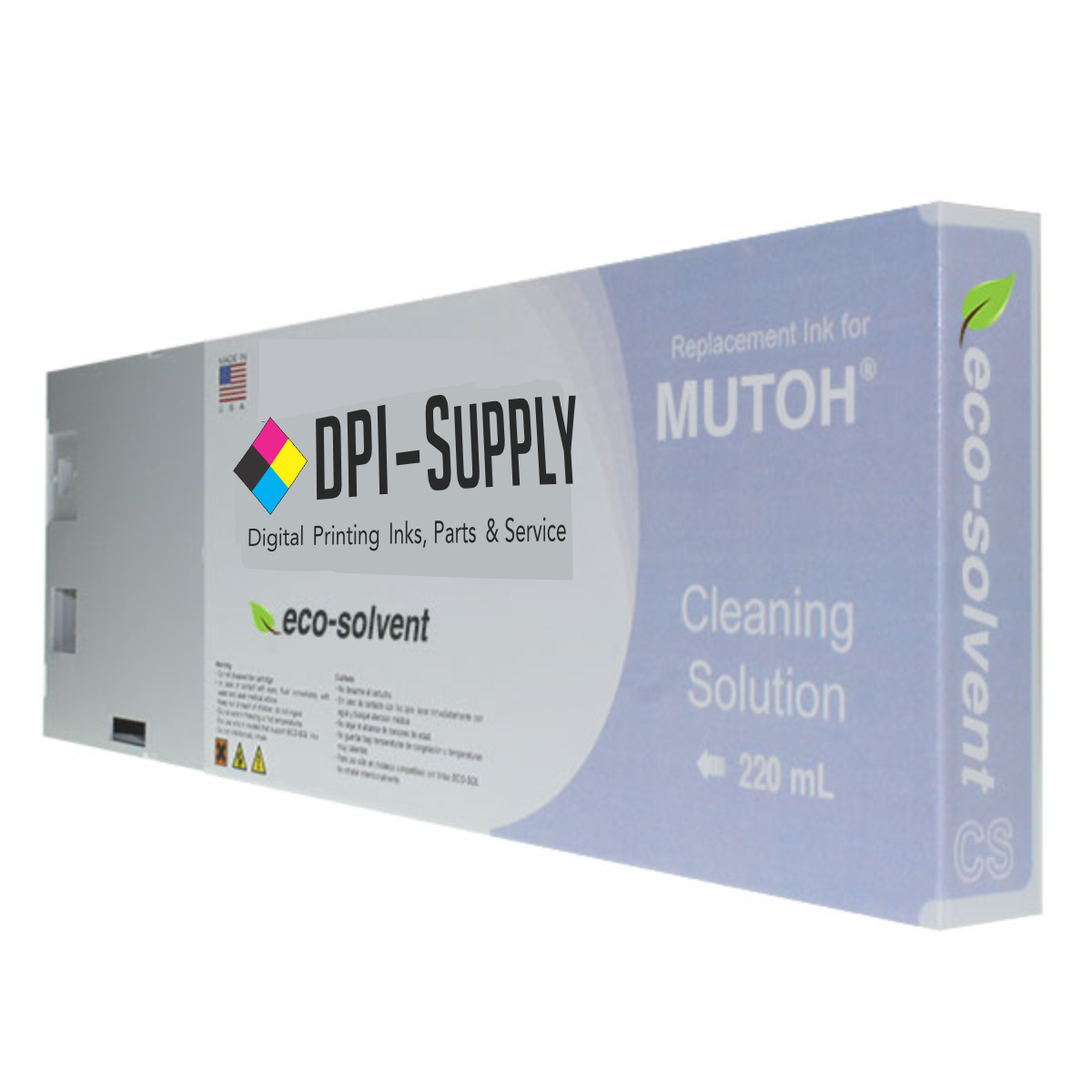
For example, MIMAKI SS21 AND ES3 BULK INK provides eco‑solvent formulations that resist fading and scratching, making them popular in outdoor signage and vehicle wraps. Similarly, MUTOH BULK INK POUCHES supply four‑color or eight‑color sets in volumes of 220 ml or more, feeding directly into Mutoh’s high‑capacity reservoirs. By purchasing these inks in bulk, print shops avoid the constant replacement of cartridges and achieve consistent colors across long print runs.
When working with specialty inks, compatibility is critical. Always verify that the ink matches your printhead technology and substrate. Using the wrong formulation can clog nozzles or produce poor adhesion. Bulk inks should be stored upright, away from extreme temperatures, and agitated gently before use to ensure even pigment distribution. If you’re transitioning from cartridges to bulk, consider performing a thorough nozzle cleaning and test print to avoid cross‑contamination between different ink chemistries.
Evaluating the True Cost: Calculating Your Savings
To understand how different bulk ink options affect your wallet, you need to calculate your true cost per print. Here’s a simple framework:
- Determine page yield – Find the manufacturer’s rated yield for the cartridge or bottle (e.g., 500 pages for a standard cartridge or 6,000 pages for a supertank bottle). Keep in mind that printing heavy graphics or photos reduces yield.
- Divide cost by yield – If a high‑yield cartridge costs $30 and yields 600 pages, your ink cost is $0.05 per page. If a bottle of EcoTank ink costs $13 and yields 3,500 pages, the ink cost drops to less than $0.004 per page.
- Add paper cost – Standard copy paper costs about 1–2 cents per page. Premium photo or specialty media will increase this.
- Factor in maintenance – Infrequent printing means more cleaning cycles, which consume ink. Supertank printers require occasional maintenance, and laser printers need drum replacements. Include these costs in your calculations.
- Estimate monthly printing volume – Multiply your total cost per page by your monthly page count. Compare the results between printers or ink systems to see how quickly a more expensive machine pays for itself.
For many households, the math is eye‑opening. A supertank printer may cost $250 more than a cartridge printer, but the ink savings of $150–$300 per year quickly erase the difference. High‑yield or third‑party cartridges can also lower costs, but the payback period is longer.
Practical Tips for Lowering Printing Costs
Beyond choosing the right hardware and ink supply, smart habits can stretch every drop of ink. Try these strategies:
- Print regularly – Inkjet printheads can clog when unused. A quick test print every week prevents dried ink and expensive cleaning cycles.
- Use draft or economy mode – For internal documents or drafts, switch to draft mode to use up to 50 percent less ink.
- Select grayscale when printing black‑and‑white – Many color printers mix color inks into black text unless you choose grayscale.
- Store ink properly – Keep extra cartridges or bottles sealed, upright and at room temperature to maximize shelf life and prevent clogs.
- Maintain your printer – Run built‑in cleaning cycles monthly and update firmware to ensure efficient ink usage.
- Avoid overbuying – Only stock as much ink as you can use within its shelf life; expired ink can degrade print quality.
Finally, when shopping for speciality inks or film, reputable suppliers make a difference. The article Where to Buy DTF Film and Inks for Fast, High-Quality Printing offers valuable guidance on finding reliable vendors, ensuring that your investment in bulk ink produces vivid, durable prints.
Conclusion: Choosing the Best BULK PRINTER INK FOR SALE FOR LOWER COST PER PRINT
Finding the best BULK PRINTER INK OPTIONS FOR LOWER COST PER PRINT is about balancing upfront costs with long‑term savings. Supertank printers deliver the lowest cost per page, often under one cent, making them ideal for families, students and small businesses that print frequently. Third‑party and remanufactured cartridges can save 50–80 percent for those sticking with traditional printers, while high‑yield cartridges offer a middle ground with lower CPP and minimal effort. Refill kits and bulk bottles provide do‑it‑yourself flexibility, and specialized inks from MIMAKI INKS and Mutoh Inks keep wide‑format printers running efficiently. By understanding your printing habits, calculating cost per print and choosing the right supply option, you can enjoy quality prints without the sticker shock.