Buying your first DTF printer is exciting, but the printer is only one part of the setup. You also need the right ink, film, adhesive powder, curing equipment, heat press, software, and maintenance supplies. Miss one piece, and your new machine may spend more time sitting than producing sellable transfers.
That is why Buying Your First DTF Printer? The DTF Ink, Film, Powder, and Supplies You'll Need should be treated as a production plan, not simply a printer purchase. The real value comes from choosing a system that works reliably day after day.
Buying Your First DTF Printer? The DTF Ink, Film, Powder, and Supplies You'll Need Before Day One
Direct-to-film printing follows a straightforward process. The printer lays a mirrored design onto coated PET film using CMYK and white ink. Adhesive powder is applied while the ink is wet, the powder is cured, and the finished transfer is heat pressed onto a garment.
Simple does not mean automatic. Poor film can create feeding or release problems, weak powder can cause adhesion failures, and low-quality white ink can turn a promising startup into a maintenance project.
Monty Hand, owner of DPI Supply, has worked in printing since he was 20. He spent 38 years in screen printing before entering the digital ink business in 2010, later becoming certified as both a Mimaki and Roland technician. That experience shaped one lesson he repeats often: saving money only helps when the supplies protect the equipment and produce consistent work.

Start With a Printer That Matches Your Production Goals
Before comparing DTF printers, estimate how many transfers you expect to produce each week. A small desktop machine may be enough for learning or filling occasional orders. A growing apparel shop needs more speed, a dependable media path, effective white-ink circulation, and support when something goes wrong.
Think about print width too. Smaller machines suit basic chest designs, while wider printers make gang sheets and larger artwork more practical.
A Commercial DTF printer should also fit the rest of your workflow. A fast printer paired with slow manual powdering creates a bottleneck. Buying oversized equipment before demand exists can also tie up money better used for supplies and backup inventory.
For a closer look at entry-level costs, read How much is a DTF printer for beginners under $1000?. It explains why the advertised printer price rarely represents the full startup cost.
Choose DTF Ink for Consistency, Not Just Price
DTF ink normally includes cyan, magenta, yellow, black, and white. White creates the opaque backing that keeps colors bright on dark garments. It also demands the most attention because its pigment can settle when the printer is inactive.
Monty has tested many DTF inks. Some looked fine for the first few weeks, but performance changed after a month or two. White output weakened, color shifted, or printheads required replacement sooner than expected.
That is where cheap ink becomes expensive. A low bottle price means little if the ink causes clogged nozzles, wasted film, repeat prints, or a damaged printhead. Monty notes that a printhead can cost well over $1,000 on some systems, so frequent replacements quickly erase any savings.
Look for ink formulated for your printer and printhead. Ask about white opacity, circulation requirements, color matching, storage, and technical support. Monty prefers higher-solid white ink because strong opacity can reduce the amount needed for a solid underbase.
Use Film That Matches Your Process
DTF film is not ordinary transparency film. Its coating is designed to receive pigment ink, hold fine details, accept adhesive powder, and release the design during pressing. Uneven film can produce grainy white layers, poor powder coverage, or areas that refuse to release.
Film comes in sheets or rolls. Sheets suit smaller manual workflows, while roll film is better for continuous production. Confirm the width before ordering.
You will also need to choose among hot-peel, warm-peel, and cold-peel products. Follow the supplier’s pressing instructions and test new film with your ink, powder, garment, temperature, time, and pressure settings.
This industry overview from STAHLS explains how DTF uses coated polyester film, water-based ink, adhesive powder, curing, and heat application. It is a useful introduction for anyone moving into apparel decoration from vinyl, sublimation, or screen printing.
DTF Powder Is the Adhesive Holding the Print Together
DTF powder is a thermoplastic adhesive applied to wet ink. During curing, it melts and bonds with the design. During pressing, the adhesive helps the transfer attach to the garment fibers.
Powder size, melt temperature, and application consistency matter. Too little powder can leave weak edges or gaps. Too much can create a heavy feel, rough outline, or stray adhesive around the design.
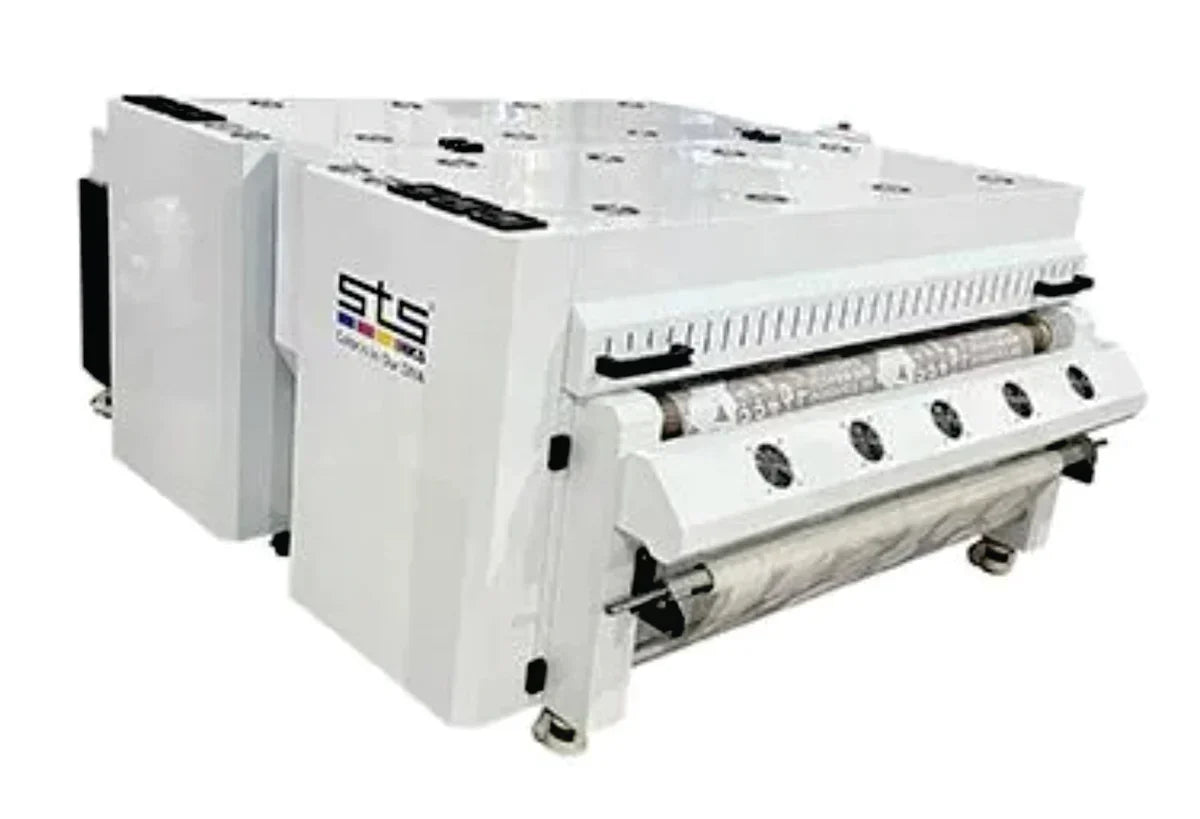
A manual tray can work for very small production, but it requires patience and a clean process. A DTF powder shaker applies powder more evenly, removes excess material, and helps keep production moving. For shops printing long gang sheets or daily orders, that consistency can save substantial labor.
Store powder dry and protect it from contamination. Follow the manufacturer’s safety data and ventilation guidance when handling or curing it. Keep dust, pet hair, and loose fibers away from the powdering area.

Do Not Forget Curing Equipment and a Heat Press
Powder must be cured before the transfer is ready to press. Small shops sometimes hover a heat press above the film, while larger operations use a curing oven or an integrated shaker-and-dryer system. The goal is even melting without scorching the film or leaving uncured powder.
A reliable heat press is equally important. Household irons struggle to deliver uniform temperature and pressure. Inconsistent pressure often shows up as lifting edges, patchy adhesion, or transfers that fail after washing.
Do not assume one universal setting fits every product. Film, powder, ink, garment fabric, and press calibration can change the correct temperature, time, and pressure. Build a test routine and document the combinations that work.
RIP Software and Color Control
DTF printers require RIP software that controls the CMYK image, white underbase, ink limits, resolution, and print order. Basic design software alone will not manage white ink correctly. Confirm whether the RIP is included and whether its license is permanent, subscription-based, or tied to one computer.
Start with clean, high-resolution artwork and transparent backgrounds. Before producing a full gang sheet, print a small color and detail test.
Monty learned the value of accurate color matching while selling alternatives to OEM ink. When he found inks that produced comparable color and outdoor durability, he knew independent ink could compete. His advice for DTF buyers is similar: test performance over time, not just on one impressive sample.
Maintenance Supplies Belong in Your Opening Order
Order cleaning solution, lint-free wipes, swabs, replacement filters, dampers, waste containers, gloves, and manufacturer-recommended tools with the printer. Waiting for a clog before buying maintenance supplies is an expensive lesson.
Monty and two other technicians use a simple rule: “Did you run it? Clean it.” Ink mist and bounced droplets collect around the printhead carriage even when the print looks good. Daily cleaning helps prevent buildup from becoming a larger failure.
Run nozzle checks regularly, follow the shutdown procedure, and keep white ink circulating or agitated as directed.
Plan for Finishing and Workflow Growth
Once transfers are cured, you need a clean place to inspect, trim, label, and store them. Flat storage helps prevent creases, moisture exposure, and contamination. Clear job labels keep similar customer orders from getting mixed together.
As volume grows, a DTF flatbed cutter can reduce hand trimming and speed up finishing. It may not be necessary on day one, but it is worth planning for when labor becomes the slowest part of production.
Leave enough room around the printer, shaker, curing unit, and press for cleaning and material handling. A cramped setup makes routine work harder and increases the chance of damaging film or touching hot equipment.
Build a Complete Starter List Before You Buy
Your opening order should include the printer, compatible RIP software, CMYK and white ink, coated film, adhesive powder, curing equipment, and a heat press. Add cleaning supplies, spare filters, protective equipment, test garments, heat-resistant tape, finishing sheets, storage containers, and basic measurement tools.
Also budget for mistakes. Your first roll of film will include tests, color adjustments, curing experiments, and a few prints you would not sell. That is normal. Document the settings so every test teaches you something.
Buying Your First DTF Printer? The DTF Ink, Film, Powder, and Supplies You'll Need is about building a repeatable system. Monty has sold alternative ink for years because customers continue buying when quality and value hold up over time. Use that same standard for every part of your setup: reliable output, maintainable equipment, and supplies that protect your investment.