Is switching from OEM to alternative printer ink worth it? For many established print shops, yes—provided the replacement ink is engineered for the exact printer, closely matches the OEM color gamut, comes from a tested supplier, and is paired with disciplined maintenance. The savings can be substantial without forcing a drop in color, durability, or workflow consistency.
The real OEM vs alternative printer ink decision is not about choosing the cheapest container on a shelf. It is about protecting output quality, printheads, deadlines, and profit margins at the same time. A proven compatible ink can do that. An untested bargain ink can quickly become the most expensive ink you ever buy.
What does OEM mean for printers?
OEM stands for original equipment manufacturer. OEM ink is sold under the printer manufacturer’s brand and designed for specific equipment, ink delivery systems, color profiles, and applications. Shops often choose it because it offers a familiar starting point and follows the manufacturer’s documented workflow.
That confidence has value, especially when a printer is new or producing tightly controlled brand colors. Still, the OEM label does not automatically mean every other ink is inferior.
I have worked in printing since I was 20, including 38 years in screen printing and digital ink work since 2010. After becoming a certified Mimaki technician and later a certified Roland technician, I learned to judge ink by performance, consistency, compatibility, and support—not by the logo alone.

What is the difference between OEM and compatible?
OEM ink is branded or approved by the printer manufacturer. Compatible ink is produced by another manufacturer to work in the same machine and deliver similar color, flow, adhesion, drying, and durability characteristics.
Compatible quality varies widely. Some products are tested and technician-supported; others may look acceptable briefly before causing instability, sediment, clogging, or printhead problems.
That is why supplier selection matters. DPI Supply did not build its current lineup by ordering the cheapest product available. Monty tested multiple suppliers, rejected products that failed to perform consistently, and continued working with inks that proved dependable in real production environments.
OEM vs Alternative Printer Ink: Is It Worth Switching for a Busy Shop?
Alternative ink is worth considering when the savings are repeatable and the performance is predictable. A lower cartridge or bag price only helps when the printer keeps producing sellable work without extra cleaning cycles, wasted media, color corrections, or head replacements.
| Factor | OEM Ink | Proven Alternative Ink |
|---|---|---|
| Upfront price | Usually higher | Often considerably lower |
| Compatibility | Manufacturer-approved | Must match the exact printer and ink system |
| Color | Familiar OEM baseline | Can closely match OEM gamut |
| Support | Manufacturer or dealer | Depends on the supplier |
| Risk | Generally predictable | Low when tested; high when unknown |
| Best fit | Warranty-sensitive workflows | Cost-conscious shops with good maintenance |
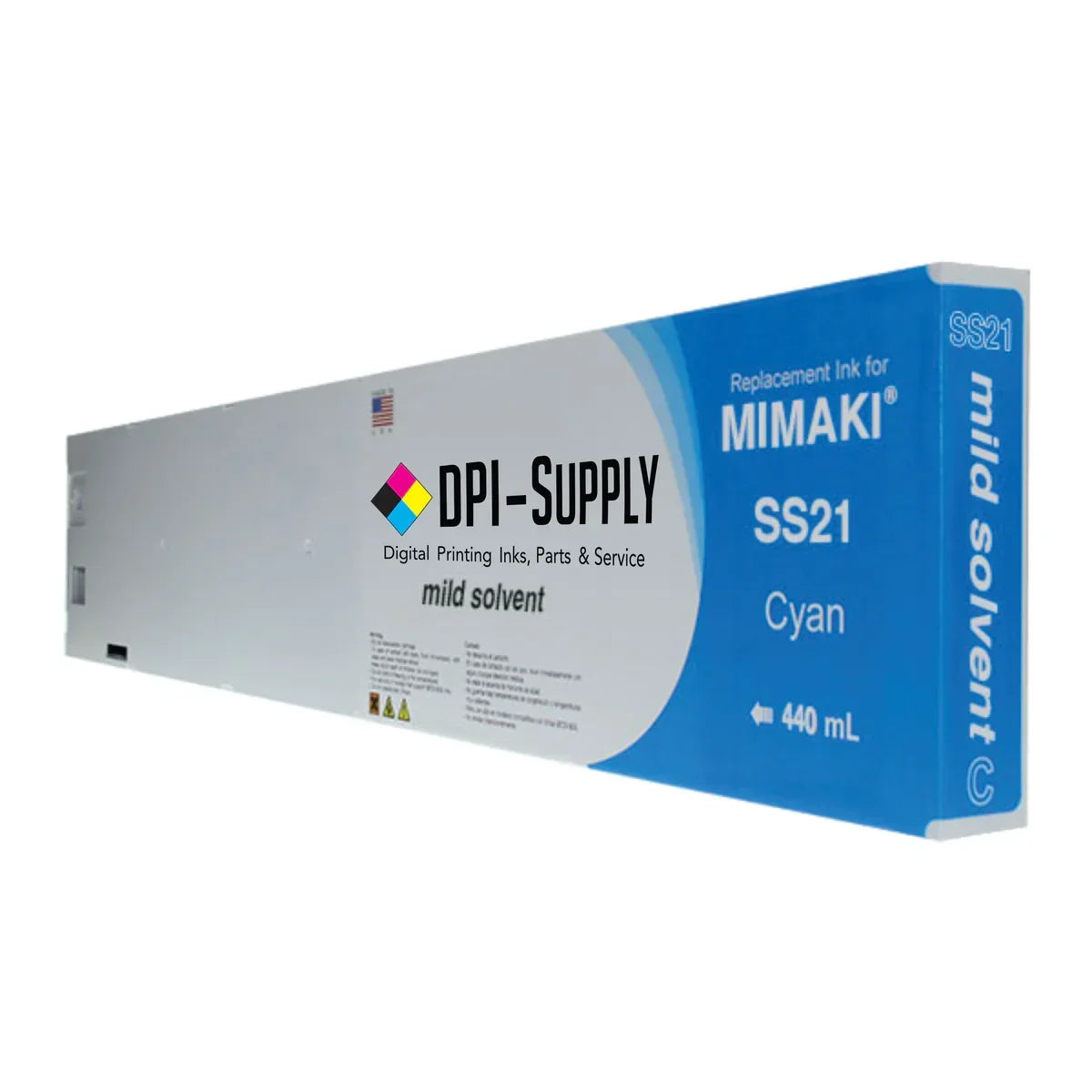
Products such as Mimaki SS21 OEM Matched Ink, Roland Eco-Sol MAX Replacement Ink, and Mutoh Eco-Ultra OEM Matched Ink are designed for shops seeking lower ink costs without rebuilding the entire workflow.
Is generic toner as good as OEM?
Generic toner can be as good as OEM toner in some machines, but “generic” is too broad to guarantee quality. Toner is a dry powder used in laser printers, while liquid ink is used in inkjet systems. The products behave differently, so success with an office toner cartridge does not prove that an industrial solvent, UV, sublimation, or DTF ink will perform well.
For toner or ink, evaluate the manufacturer, chip reliability, color density, yield, consistency, and support. Ask whether it has been tested in the specific machine over time. One good print is not a durability test.

What are the 4 types of printers?
Four commonly discussed printer categories are inkjet, laser, thermal, and impact printers. Commercial graphics shops mostly work with specialized inkjet equipment, although the ink chemistry varies greatly.
Inkjet printers
Inkjet printers jet liquid ink through very small nozzles. Large-format eco-solvent, solvent, UV, aqueous, sublimation, and DTF printers fall into this broad category.
Laser, thermal, and impact printers
Laser printers use toner and an electrostatic imaging process. Thermal printers use heat, either on treated paper or through a ribbon. Impact printers physically strike an inked ribbon, much like a typewriter.
The category is only the beginning. Match the ink to the machine, printhead, substrate, curing method, and finished application.
How much can a print shop actually save?
The savings can be meaningful, particularly for shops buying large bags or cartridges every month. One DPI Supply customer, Frank at Specialty Print, had been purchasing OEM Mimaki SS21 ink in 2,000-milliliter bags. After another price increase, the OEM bag cost more than $400, while Monty supplied a comparable alternative for $159 at that time.
Across several colors, printers, and a full year, that difference becomes a major operating expense. Still, calculate total cost, including cleaning ink, wasted media, reprints, downtime, service calls, and printhead life. The winner lowers cost per sellable print.

What quality checks matter before switching?
Start with color. A well-matched alternative should produce a similar gamut without creating an obvious shift in routine jobs. Run familiar files containing neutral grays, skin tones, gradients, saturated brand colors, and heavy ink coverage.
Next, examine nozzle performance, curing, adhesion, scratch resistance, outdoor exposure, and batch consistency. Do not judge the ink on one bright sample.
Monty’s turning point came when he saw alternative inks deliver the color and outdoor durability his customers expected from OEM products. Since then, he has sold tens of thousands of gallons. He is also candid that no supplier can honestly promise there will never be an issue. What matters is whether the product and support team respond reliably when something happens.
For a model-specific comparison, read Roland TrueVIS TR2 replacement ink vs OEM ink.
Printer maintenance matters more than the label on the ink
Many ink complaints are actually maintenance problems. Ink is jetted toward the media, but not every droplet lands perfectly. Fine mist and bounced ink can collect around the carriage, printhead, cap tops, and wipers.
Our rule is simple: did you run it? Clean it. If the printer ran today, inspect and clean it today rather than waiting until Friday. That routine protects nozzle performance and helps stop dried residue from becoming a larger service problem.
Roland warns that ignoring maintenance prompts can lead to longer automatic cleaning cycles, higher ink use, clogged nozzles, and poor output. Its printer maintenance guidance explains why routine cleaning belongs in the production schedule.
Maintenance is especially important with white water-based ink. White pigment can settle, and weak formulations may thicken, discolor, or create flow problems over time. Cheap ink is no bargain if neglected cleaning contributes to a $1,200 printhead replacement.
How to switch without disrupting production
Do not change every printer in the shop on the busiest day of the month. Choose one compatible machine, document its current nozzle test and color output, and establish a controlled trial.
Run a representative mix of jobs. Track ink usage, cleaning frequency, reprints, color adjustments, and operator feedback. Compare cost per completed job rather than relying on first impressions.
Confirm the exact printer model, current ink configuration, chip requirements, cartridge size, and any flushing instructions before installation. Some products are true drop-in replacements, while other changes require a defined conversion process.
Buy from a supplier that understands the equipment. Monty stays current through trade shows, technician training, manufacturer conversations, and industry discussions—even with competitors. That experience matters when a shop needs more than a tracking number.
When staying with OEM still makes sense
OEM ink can remain the right choice when a service contract requires it, a warranty or certification depends on an approved ink-and-media combination, or a customer specification names a particular system. It may also make sense to avoid changing a stable workflow during peak season.
Paying more for a genuine requirement is reasonable. Just review the agreement, application, certification, and support terms instead of assuming a higher price always means better results.
The final verdict on OEM vs alternative printer ink
OEM vs alternative printer ink is not a contest between “safe” and “cheap.” It is a comparison between two supply strategies. OEM offers a familiar manufacturer-backed path, while a proven alternative can preserve production quality and release money for labor, equipment, marketing, or growth.
Switch when the product is correctly matched, tested over time, backed by knowledgeable support, and paired with daily maintenance. Stay with OEM when a written requirement or specialized workflow makes it necessary. Either way, protect the printer first. The lowest invoice means nothing if the machine is down.