For sign shops comparing Mimaki SS21 ink alternatives, the real choice is not simply OEM versus “cheap ink.” A well-tested compatible ink can deliver dependable color, outdoor performance, and production consistency at a lower operating cost, while OEM ink offers manufacturer-backed familiarity and established specifications. The deciding factor should be proven performance, not the logo on the package.
Ink is not a minor expense in a busy wide-format shop. Even a modest difference in cost can add up quickly, but saving money is pointless if replacement ink creates color shifts, clogged heads, extra cleaning, or lost production.
Monty Hand, owner of DPI Supply, has seen both sides. He spent 38 years in screen printing, entered the digital ink business in 2010, became a certified Mimaki technician, and later a certified Roland technician. His experience made him skeptical of both extremes: paying more simply because an ink is OEM and buying the cheapest compatible product available.
Mimaki SS21 Ink Alternatives: OEM vs Compatible Ink for Sign Shops
Mimaki SS21 is a solvent ink platform used across a range of Mimaki wide-format printers. Sign shops rely on SS21 systems for banners, decals, vehicle graphics, signs, and other work where dependable color and production matter.
OEM ink is the factory-branded option sold for the printer. Compatible ink is produced by another manufacturer to work in the same system and, in better products, to closely match OEM color and operating characteristics.
The quality gap between one compatible ink and another can be enormous.
Monty learned that early. When he entered the alternative ink business, he bought from several suppliers and found that some inks simply did not perform well enough. His turning point came after meeting an industry contact while training as a Roland technician in 2018, which led him to STS Inks. He tested the products before deciding they were good enough to sell.
That testing-first mentality is important for any sign shop considering a switch.

What Are You Really Paying for With OEM SS21 Ink?
OEM ink gives a shop predictability. The printer manufacturer publishes its specifications, and service technicians are accustomed to working with it.
For shops that never want to evaluate another ink source, that simplicity has value. Shops producing graphics under specific manufacturer, media, or service programs should also check their requirements before changing consumables.
The drawback is cost.
Monty recalls a customer who had been using only SS21 2000ML OEM ink. After another price increase, the customer was paying more than $400 for a 2000ML bag of Mimaki SS21 ink. Monty says he was able to provide a comparable alternative for $159.
That difference becomes significant when multiplied across colors, printers, and months of production.
Why Compatible SS21 Ink Can Make Financial Sense
A quality Mimaki SS21 Replacement Ink is designed for shops that want to lower consumable costs without rebuilding their entire workflow.
The best-case scenario is simple: install the compatible product, keep printing, maintain color consistency, and spend less on ink. Monty says his made in the USA manufacturer has done a strong job matching the OEM color gamut, so his customers generally do not see a major color shift when switching.
Compatible ink should not require constant profile changes, repeated troubleshooting, or a new maintenance ritual just to justify a lower purchase price. If savings disappear into labor and downtime, the ink was never inexpensive.
For a broader look at the decision, DPI Supply also explains it in OEM vs Alternative Printer Ink: Is It Worth Switching?.
OEM-Matched Does Not Mean Every Compatible Ink Is Equal
The phrase OEM-Matched Mimaki SS21 Ink should describe a performance target, not just marketing language.
Monty has tested enough ink to know the difference. He openly says some products he tried earlier in his career did not perform as well as they needed to. That experience is why he focuses heavily on the manufacturer behind the ink instead of assuming every third-party formulation is interchangeable.
He has also seen the consequences of chasing price alone in other ink categories. A product can appear fine at first but become unstable over longer production periods. The same lesson applies to solvent printing: the cheapest cartridge or bag can become expensive if it contributes to reprints, maintenance problems, or printhead issues.
A sign shop should ask who manufactures the ink, how long it has been used in real production environments, whether the color match is proven, and whether the supplier understands the printers it supports.

A Practical OEM vs Compatible Ink Comparison
| Consideration | OEM Mimaki SS21 Ink | Quality Compatible SS21 Ink |
|---|---|---|
| Upfront ink cost | Typically higher | Typically lower |
| Color familiarity | Factory-established | Should closely match OEM |
| Switching effort | None | Often minimal with a proven match |
| Supplier choice | Mimaki dealer network | Depends on compatible provider |
| Maintenance | Still required | Still required |
| Best fit | Factory-consumable preference | Cost-conscious production shops |
The maintenance row deserves attention. Neither ink option eliminates the need to take care of the printer.
Maintenance Matters More Than Many Shops Admit
Monty and two technicians he works with have a simple rule when customers ask how often a printer should be cleaned: “Did you run it? Clean it.”
The reasoning is practical. Ink is jetted toward a substrate at high speed, and some residue can collect around the printhead carriage and other areas. Routine cleaning helps protect consistent output.
Switching to Mimaki SS21 Mild Solvent Ink should not change that responsibility. A neglected Mimaki can develop problems on OEM ink too.
Monty believes poor maintenance is one of the biggest reasons shops struggle with digital equipment. Waiting until the end of the week to clean a printer that has been running hard every day can create avoidable issues.
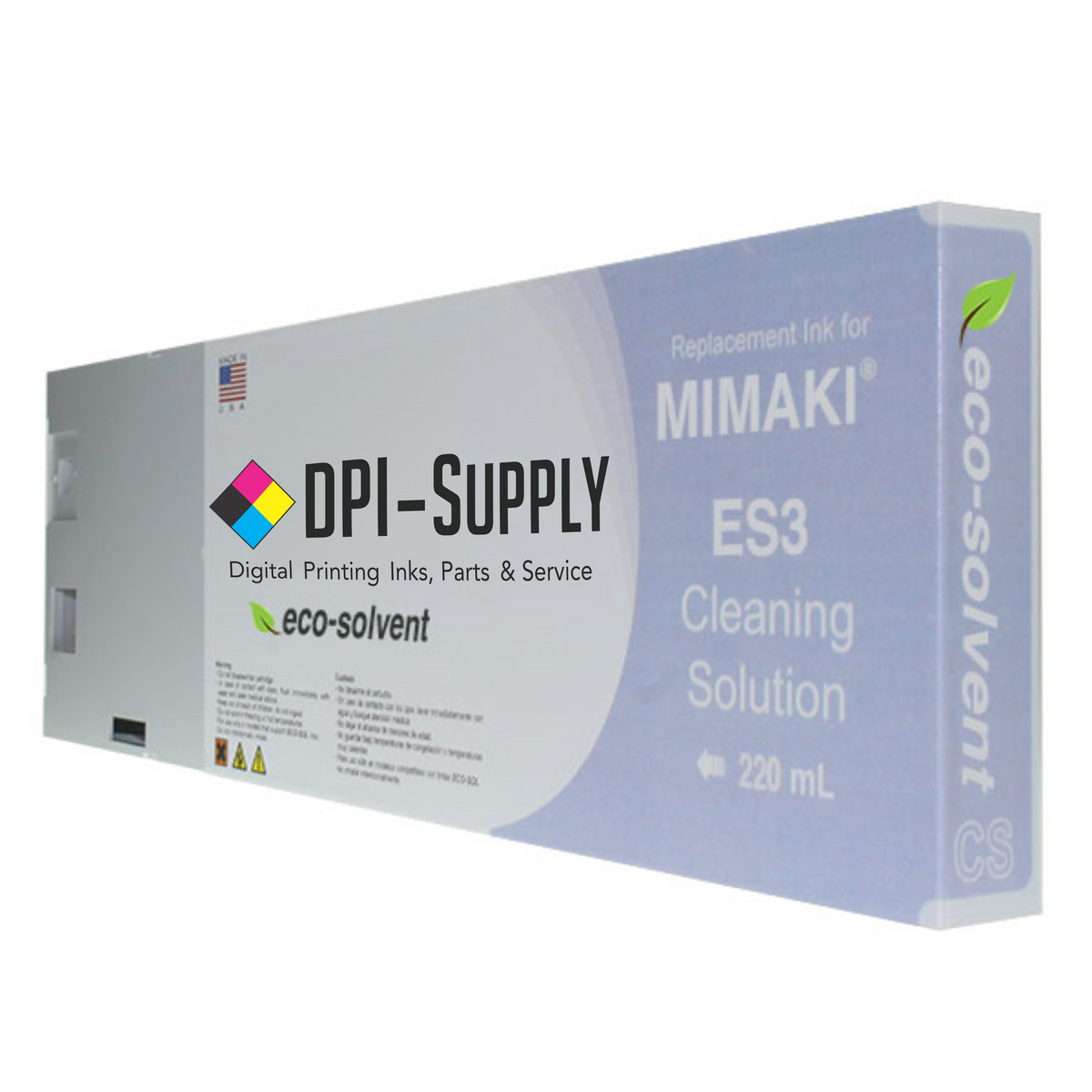
Keep the correct Mimaki SS21 Cleaning Solution and Printer Maintenance Supplies available so operators can clean the machine before print quality drops. Shops should also follow the maintenance procedures for their specific printer model. Mimaki publishes official information through its SS21 ink and printer supply documentation.
When OEM Ink May Still Be the Better Choice
Compatible ink is not automatically right for every operation.
If a shop works under a graphics warranty or service program with specific ink requirements, check those requirements before switching. A newer printer may also have warranty or service considerations the owner wants to evaluate first.
Some production managers prefer to keep every component factory-branded because internal standardization matters more than consumable savings. That is a legitimate operating decision.
The point is to make the choice with the numbers in front of you. Compare annual ink spend, expected savings, printer requirements, service agreements, color expectations, and the compatible supplier’s track record.
How to Evaluate a Mimaki SS21 Alternative Before Switching
Do not evaluate alternative ink by price alone. Start with performance.
Ask whether the ink is designed as a direct SS21 replacement, whether the supplier can explain who makes it, and whether other shops have run it successfully over meaningful periods. Find out what support is available if a chip, cartridge, color, or installation issue occurs.
Then calculate the real savings. Look at ink consumption over six or twelve months rather than one cartridge. A small per-cartridge difference is easy to ignore; thousands of dollars across a production fleet are not.
Finally, keep maintenance consistent before and after the switch. That gives you a fair comparison and reduces the chance of blaming new ink for a problem that was already developing.
The Bottom Line for Sign Shops
Mimaki SS21 Ink Alternatives can make strong financial sense when the compatible ink has been tested, matches color well, and comes from a supplier that understands wide-format equipment. OEM ink remains the simplest factory-backed choice, but a proven alternative can reduce consumable costs without forcing a sign shop to sacrifice the output its customers expect.
Monty’s experience is a useful reminder. He did not become confident in alternative ink because it was cheaper. He became confident after seeing the color, outdoor durability, and repeat purchasing from customers who kept using it.
For a sign shop, that is the real test. The best ink is the one that keeps the printer producing sellable work, day after day, at a cost that makes sense for the business.