Selecting the right ink for your Mimaki printer can feel daunting, especially when you’re balancing print quality, sustainability, and cost. Eco‑solvent inks like SS21, SS22 and BS4 have become the standard for wide‑format printing because they produce vibrant colour, dry quickly and adhere well to vinyl, banners and other media. Beyond that shared DNA, each ink set has specific strengths and compromises. This guide walks through the differences and helps you choose the best option for your business. While we focus on Mimaki inks, links to complementary products like Mutoh Valuejet Eco-Ultra Ink, Roland TrueVIS TR2 Replacement Inks, and Mimaki ES3 Compatible Ink are included for those comparing across brands.
Understanding Eco‑Solvent Inks for Mimaki Printers
Eco‑solvent inks are solvent‑based pigments that have been engineered to reduce odour and chemical emissions while still offering excellent outdoor durability. Mimaki’s SS21 and SS22 sets fall into this category and are widely used for signs, vehicle wraps and banners. The inks dry quickly due to the volatility of their solvent blend, allowing direct printing onto PVC and similar substrates. This quick drying means prints can be laminated or cut almost immediately, streamlining production. If you’ve previously used inks like Mutoh Valuejet Eco-Ultra Ink or Roland TrueVIS TR2 Replacement Inks, you’ll find Mimaki’s eco‑solvent systems deliver similar speed and weather resistance.
Performance and Durability

Mimaki solvent inks are known for excellent weatherability and rub‑fastness. Accelerated tests on SS21 and ES3 inks have shown minimal fading over three years, making them suitable for long‑term outdoor installations. BS4 inks, while more budget‑oriented, still offer robust outdoor durability and light‑fastness. These performance traits are why SS21 remains the workhorse in many print shops, and why BS4 appeals to high‑volume operations needing reliable results at lower cost.
What is the difference between SS21 and SS22 ink?
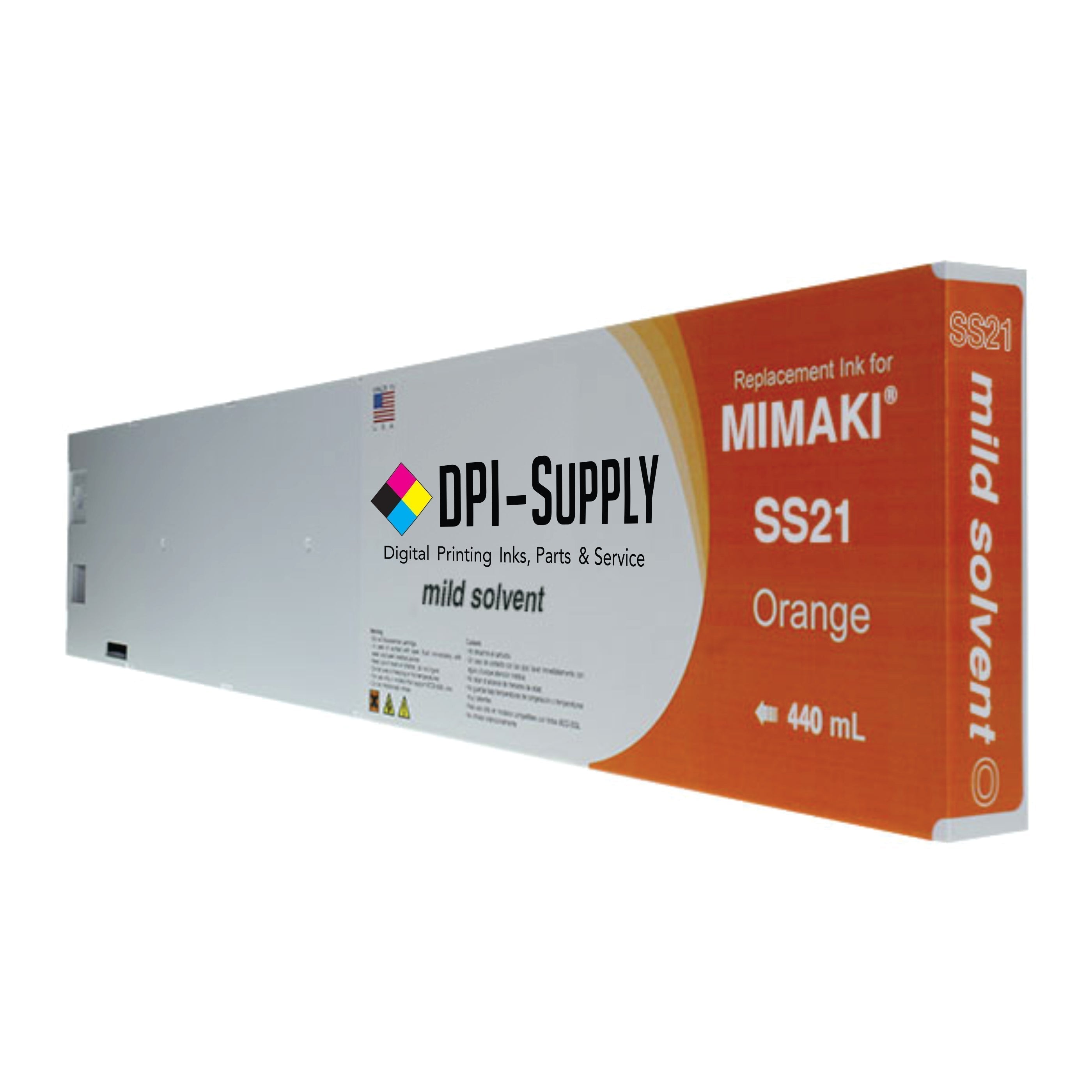
SS21 has long been Mimaki’s flagship eco‑solvent ink. It delivers rich colour, fast drying and a broad colour gamut (CMYK plus light cyan, light magenta, light black and orange). SS22 was introduced as a next‑generation replacement, retaining the print quality of SS21 while addressing environmental and health concerns. The core differences lie in chemistry and packaging:
Chemical Composition and Odour
SS21 contains gamma‑butyrolactone (GBL), a solvent under increasing regulation. SS22 eliminates GBL entirely. According to Mimaki, SS22 inherits the weather resistance, dryness and other features of SS21 but reduces odour by about 40 %. Removing GBL makes SS22 safer for operators and more suitable for enclosed or customer‑facing environments.
Packaging and Sustainability
SS22 uses recyclable paper cartridges instead of the plastic housings used by SS21. This shift dramatically cuts plastic waste and recently earned Mimaki a sustainability award. The paper cartridges can also make storage and disposal easier, especially for shops aiming to reduce their environmental footprint.
Compatibility and Colour Gamut
From a user perspective, SS21 and SS22 produce identical colour brightness and durability. Both support the same expanded colour gamut, giving you smooth gradients and vibrant oranges. Printer compatibility differs slightly: SS21 works with a wide range of models, including the CJV150, CJV300, JV150 and JV300 series, as well as newer CJV330 and JV330 machines. SS22 is officially supported on the CJV200 series and also runs on CJV300 and JV330 printers. Always confirm firmware support before switching ink families.
Sustainability and Environmental Impact of Mimaki Inks
Eco‑conscious printing is not just a marketing trend—it’s a requirement in many markets. Both SS21 and SS22 carry GREENGUARD Gold certification, meaning they meet strict chemical emission standards. SS22 goes further by eliminating GBL and adopting recyclable paper cartridges. These innovations reduce fumes during printing and improve indoor air quality. Mimaki’s cardboard cartridge system was recognized with a Sign Industry Sustainability Award, highlighting the company’s commitment to reducing plastic waste. While BS4 does not use paper cartridges, it still qualifies for GREENGUARD Gold and offers cost‑effective, low‑odour printing for high‑volume jobs.

Using a Mimaki Printer? Choosing Between SS21, SS22, and BS4: Compatibility and Printer Models
Your printer’s configuration largely dictates which ink you can use. SS21 is supported on the widest range of Mimaki eco‑solvent printers, making it the safe default for older equipment. SS22 is designed for newer models like the CJV200 and JV330 series; it’s engineered as a drop‑in replacement with no need for profile changes. BS4 inks are offered primarily in bag‑based formats for selected CJV and JV platforms. Because switching between ink families requires flushing the system, always consult your vendor and follow proper maintenance procedures. Compatibility isn’t optional—using an unsupported ink could clog print heads or void warranties.
What is the price of Mimaki BS4 ink?
Pricing varies by region and packaging, but BS4 is generally the budget‑friendly option. Vendors list 600 mL BS4 bags at around $56 USD, and multi‑liter packs reduce the cost per millilitre even further. Some European suppliers advertise tiered pricing—individual bags might cost €58 each, dropping to around €52 when purchased in pairs. In comparison, SS21 and SS22 cartridges typically range from $140 to $200 for 440 mL. While BS4’s lower price is appealing, remember that it only supports CMYK and lacks the light colours and orange channel of SS21/SS22.
What is the difference between Mimaki ES3 and SS21?
ES3 is another eco‑solvent ink in Mimaki’s lineup, marketed as an office‑friendly alternative. Compared with SS21, ES3 produces less odour and is better suited to enclosed workspaces. However, it sacrifices some abrasion resistance—many operators laminate ES3 prints for long‑term durability. SS21, by contrast, is known for strong scratch resistance and outdoor performance. Shops that laminate everything may not notice the difference, but if you often produce vehicle wraps or high‑touch decals, SS21’s toughness is a significant advantage. Both inks are compatible only with specific printers, and switching requires a complete system flush.
Is Mimaki a good printer?
Mimaki is widely regarded as a technology leader in wide‑format printing. The company offers a broad range of printers from eco‑solvent roll‑to‑roll machines to hybrid UV systems. Mimaki machines support specialty inks like white, clear varnish and metallics, enabling high‑detail output on rigid and flexible substrates. Advanced features such as automated calibration tools and multi‑roller media handling improve precision and productivity. The trade‑off for this versatility is a steeper learning curve; users may spend time mastering software settings and maintenance routines. If ease of use is your top priority, brands like Roland emphasise simplicity, but if you need industrial‑grade features and broad media compatibility, Mimaki is an excellent choice. Their commitment to sustainability—evident in innovations like paper cartridges and GREENGUARD‑certified inks—also appeals to environmentally conscious businesses.
Choosing the Right Ink for Your Business
Every print shop has unique requirements. Consider your printer model, budget, workflow and environmental goals when selecting an ink. If you operate a legacy CJV150 or JV300 and need maximum durability, SS21 remains a proven option. For newer equipment or businesses prioritizing indoor air quality, SS22 delivers the same colour brilliance without GBL and with recyclable packaging. Cost‑sensitive operations producing short‑ to medium‑term signage may prefer BS4, especially when high‑volume runs make the lower price per millilitre attractive. If environmental comfort is paramount and you laminate your prints, ES3 might also merit consideration.
Feature Comparison Table
| Ink | Key Features | Best For |
|---|---|---|
| SS21 | Rich colours; fast drying; strong scratch resistance; CMYK + light colours + orange | Legacy machines; vehicle wraps; long‑term outdoor signage |
| SS22 | GBL‑free; reduced odour; recyclable paper cartridges; matches SS21 performance | Newer printers; environmentally conscious shops; installations in schools/hospitals |
| BS4 | Quick drying; excellent weatherability; cost‑effective; CMYK only | High‑volume, budget‑driven production; short‑ to medium‑term signage |
Final Thoughts
Choosing between SS21, SS22 and BS4 isn’t just about buying ink; it’s about aligning your consumables with your equipment, workflow and values. SS21 remains the dependable workhorse, offering robust durability and broad compatibility. SS22 carries the torch forward with greener chemistry and packaging. BS4 brings affordability and solid performance to cost‑conscious shops. Whichever path you take, work with reputable suppliers, confirm compatibility, and invest time in colour profiling. For more detail, see DPI Supply’s in‑depth What is the difference between mimaki SS21 and SS22? and the sustainability award article that highlights Mimaki’s eco‑friendly innovations. And if you’re exploring other brands, resources like Mutoh Valuejet Eco-Ultra Ink or Roland TrueVIS TR2 Replacement Inks provide useful comparisons. Your choice of ink shapes your production quality and environmental impact—make it wisely.