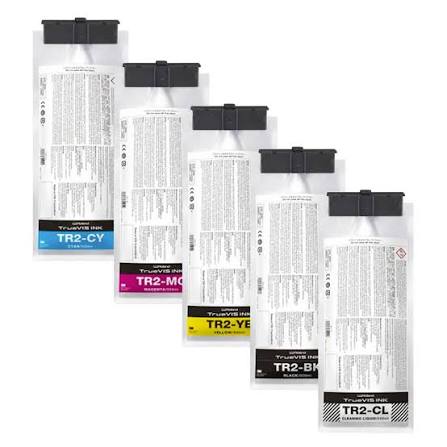
Roland TrueVIS SG2, VG3, and SG3 printers are compatible with Roland TR2 eco-solvent ink, including properly formulated third-party TR2 replacement inks. These printers use 500mL ink pouches, although their color configurations can differ. Choosing the correct ink family, pouch format, and color setup is essential for maintaining reliable print quality and avoiding unnecessary equipment problems.
For print shops producing banners, decals, vehicle graphics, and signs, understanding ink compatibility can also make a noticeable difference in operating costs. The good news? You don't necessarily have to purchase expensive original equipment manufacturer (OEM) ink to achieve professional results.
What Inks Are Compatible With Roland TrueVIS SG2, VG3, and SG3 Printers?
Roland's TrueVIS SG2, VG3, and SG3 printer/cutters use TR2 eco-solvent ink technology. However, each series has specific model numbers and color configurations that operators should verify before ordering replacements.
Here's a breakdown of common compatible models:
| Printer Series | Compatible Models | Ink Family |
|---|---|---|
| Roland SG2 | SG2-300, SG2-540 | TR2 Eco-Solvent |
| Roland VG3 | VG3-540, VG3-640 | TR2 Eco-Solvent |
| Roland SG3 | SG3-300, SG3-540 | TR2 Eco-Solvent |
| Roland VG2 | VG2-540, VG2-640 | TR2 Eco-Solvent |
The SG3 models use a standard four-color CMYK configuration, while VG3 printers support additional color arrangements depending on their setup. This distinction matters because ordering the correct ink family doesn't automatically mean you've selected every color your equipment requires.
Print shops looking for alternatives can explore Roland TR2 Ink products specifically formulated for compatible TrueVIS machines.
How Do I Know What Ink Is Compatible With My Printer?
The easiest way to determine compatibility is to identify your printer's exact model and check the ink currently installed. Although Roland manufactures several wide-format printer families, not every Roland machine uses the same ink chemistry. An ink designed for one model can be unsuitable for another, even when the printers look nearly identical.
Check These Four Details Before Ordering
-
Printer model: Confirm whether you operate an SG2, VG3, SG3, or another Roland series.
-
Ink family: Identify TR2, Eco-Sol MAX, or another formulation.
-
Ink configuration: Check the number and specific colors installed.
-
Ink packaging: Confirm whether your system requires 500mL pouches, cartridges, or another format.
For additional guidance, DPI Supply's Printer Ink Compatibility Guide explains how to match Roland, Mimaki, Mutoh, and other printers with suitable replacement inks.
One detail worth emphasizing: two printers from the same manufacturer might require completely different products. Never order based on the Roland name alone.

Can I Use a Different Brand of Ink in My Printer?
Yes. Many commercial Roland printers can operate with properly formulated third-party replacement inks. The important distinction is between an alternative ink developed for your printer's existing ink system and an unrelated ink that simply appears similar.
For example, VG2 Compatible Inks formulated to match TR2 applications may provide an economical alternative to Roland-branded products. However, switching should never be treated as completely risk-free, especially when you're operating expensive commercial printing equipment.
What Makes an Alternative Ink Reliable?
A dependable replacement should provide:
-
Consistent color reproduction across production runs.
-
Appropriate viscosity and compatibility with the printing system.
-
Suitable adhesion to supported printing materials.
-
Reliable drying and outdoor performance.
-
Verified compatibility with the printer's existing configuration.
Before switching, review supplier guidance and run test prints. Color profiles may also require adjustments, depending on the ink formulation and materials being used.
Third-party ink can affect manufacturer support or certifications, so it's worth reviewing applicable warranty requirements before making a change.
Why DPI Supply's Owner Understands Ink Compatibility
Monty Hand, owner of DPI Supply, didn't enter the printing industry through a sales department. His experience began with screen printing when he was approximately 20 years old, eventually developing into a career spanning nearly four decades in traditional printing.
After spending 38 years in screen printing, Monty transitioned into digital ink distribution. He's worked in the digital ink business since 2010 and became a certified Mimaki technician before earning his Roland technician certification in 2018. That technical background helped shape how DPI Supply evaluates alternative inks.
Finding Ink That Performs Beyond Its Price
Monty recalls that one of his earliest challenges involved finding suppliers whose products could consistently compete with OEM formulations. Some alternatives initially appeared affordable but didn't perform reliably enough for professional production, creating concerns about whether the savings were worthwhile.
A turning point came during his Roland technician training in 2018, when a conversation with an industry distributor introduced him to STS Inks. After evaluating color performance and outdoor durability, Monty became more confident that carefully selected alternative inks could compete with established brands.
His perspective is straightforward: ink should be evaluated on how consistently it performs, not simply whose name appears on the packaging. That's particularly relevant for businesses comparing Roland TrueVIS replacement options today.
What Printers Can Use Generic Ink Cartridges?
Many commercial wide-format printers support compatible aftermarket inks, provided the products are designed for their specific ink systems. These include selected machines from Roland, Mimaki, Mutoh, and Epson-based printing systems.
However, the word "generic" can be misleading. A quality alternative isn't necessarily a universal product that works across multiple unrelated machines. Instead, reputable suppliers develop or select formulations suited to particular printer families and ink delivery systems.
Which Printers Accept Compatible Cartridges?
Compatibility depends on the individual printer and its required ink delivery system. For Roland TrueVIS machines, products advertised as Roland TrueVIS VG2 Ink should be checked against the printer's existing TR2 configuration.
Other Roland machines may require Eco-Sol MAX or Eco-Sol MAX 2 instead. Additionally, some TrueVIS printers use reusable cartridge holders with replaceable ink pouches rather than conventional sealed cartridges.
Using the wrong system may produce recognition errors, poor color output, or ink delivery problems. The safest approach is to verify exact product compatibility with an experienced supplier before purchasing.

How to Check Cartridge Compatibility Before Switching
Even when an ink supplier lists your printer as compatible, a few additional checks can prevent expensive mistakes. Start by comparing your current OEM ink identification with the replacement product description, then confirm that the replacement supplies every color required by your machine.
For example, an SG3 typically operates with cyan, magenta, yellow, and black. Certain VG3 configurations incorporate additional colors, meaning a basic CMYK replacement set may not cover every ink position.
Test Your Printing Performance
After confirming the supplier's changeover procedure, test the replacement ink using familiar production materials. Look closely at:
-
Color accuracy and gradients.
-
Small text and fine details.
-
Banding or inconsistent ink delivery.
-
Drying and adhesion.
-
Performance on commonly used vinyl or banner materials.
Keep a reference print from your previous ink setup whenever possible. Comparing real production samples provides more useful information than relying exclusively on advertised specifications, particularly if your business regularly produces graphics that require consistent brand colors.
How Much Can Print Shops Save With Alternative TR2 Ink?
Ink expenses accumulate quickly in businesses producing large volumes of graphics. According to DPI Supply's published TR2 product listings, selected 500mL alternative ink pouches have been advertised starting around $52, compared with a listed reference price of $115.
At those example prices, the difference is $63 per pouch, or approximately 55%. Actual savings depend on current pricing, ink consumption, shipping, and the specific replacement product.
Monty has seen the impact firsthand. He recalls working with Frank at Specialty Print, who had been purchasing expensive OEM Mimaki SS21 ink. When the OEM price for a 2,000mL bag exceeded $400, Monty supplied an alternative for approximately $159.
That example involved Mimaki rather than Roland, but it illustrates why print businesses explore alternative inks. For an operation consuming ink daily, even relatively modest per-pouch savings can accumulate over a year.
The priority should still be total operating costs, including maintenance, wasted material, and printhead reliability. Saving money on ink loses much of its value if poor performance leads to additional repairs or production downtime.
What Is the Most Reliable Printer Brand for Professional Printing?
Roland, Mimaki, Mutoh, and Epson are established names in commercial digital printing. However, there's no single brand that automatically offers the best reliability for every application. Equipment condition, print volume, maintenance habits, and ink quality all influence performance.
Roland's official TR2 specifications describe an expanded color gamut, 500mL pouches, and compatibility with selected TrueVIS machines. Roland also identifies specific ink-and-printer combinations eligible for graphics warranty programs, although those manufacturer-backed programs shouldn't automatically be assumed to cover third-party alternatives.
Why Daily Maintenance Matters More Than Many Operators Realize
Monty's advice on printer maintenance is particularly practical. He and other technicians use a simple reminder: "Did you run it? Clean it."
When ink is discharged from a printhead, not every droplet lands perfectly on the intended material. Some mist can collect around the printhead carriage and other components, gradually accumulating residue that may contribute to printing problems.
Monty recommends cleaning the equipment after each day of operation, following the manufacturer's approved procedures. That routine matters regardless of whether you're using original Roland ink or a compatible alternative.
Where Can You Buy Compatible Roland TR2 Ink?
For owners of SG2, VG3, and SG3 printers, the best starting point is a supplier that understands specific printer configurations rather than simply selling cartridges by brand name. DPI Supply offers Roland TR2 Ink alternatives in 500mL formats for compatible TrueVIS equipment.
Its product range includes standard CMYK colors and additional options for supported printer configurations. Before purchasing, confirm your exact model, installed ink family, and color arrangement to avoid ordering a product that won't work with your equipment.
Monty's years of hands-on printing experience reinforce an important lesson: lower ink prices are only beneficial when the ink performs consistently and the equipment receives proper maintenance. For a busy print shop, that combination can help control expenses without sacrificing the quality customers expect.