
Understanding Eco‑Solvent Inks
Eco‑solvent inks are the workhorses of wide‑format printing. They offer rich colours, fast drying and the flexibility to print on vinyl or banners without lamination. Mimaki’s SS21 ink set has been a staple in this market, known for robust outdoor durability and reliable performance. In response to tightening chemical regulations, Mimaki released SS22, a next‑generation ink that preserves all the qualities of SS21 while addressing health and environmental concerns. Understanding how these two inks differ will help you decide which is best for your business.
What is the difference between Mimaki SS21 and SS22?
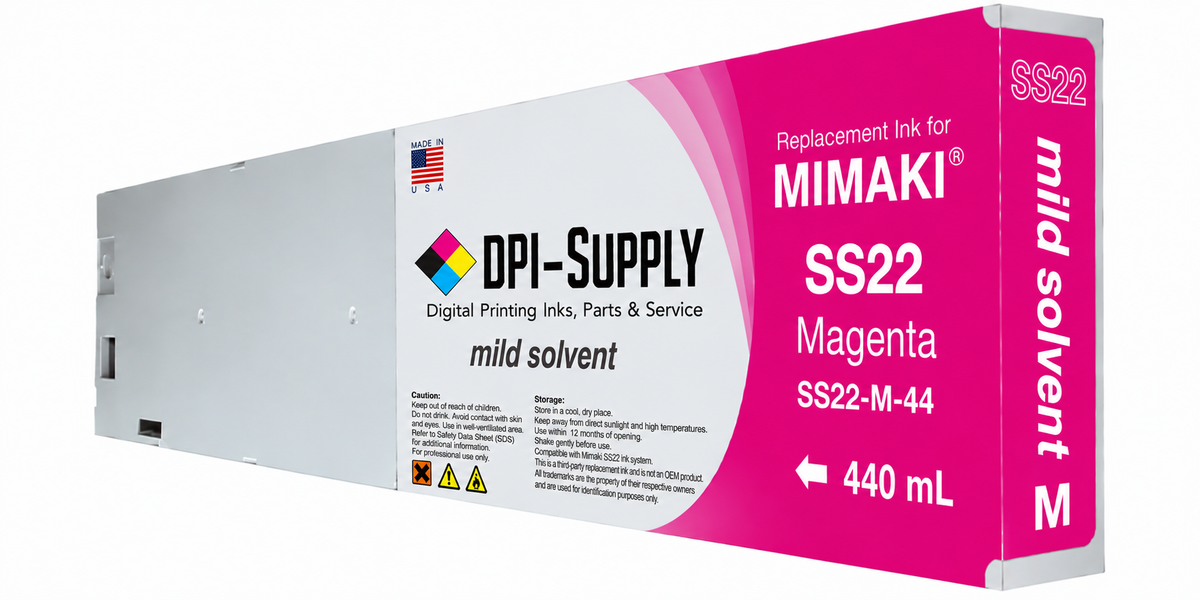
At their core, SS21 and SS22 are both eco‑solvent inks designed to produce vibrant, weather‑resistant prints. The major distinction lies in chemistry. SS21 contains gamma‑butyrolactone (GBL), a solvent ingredient that has come under increasing regulation. SS22 eliminates GBL entirely, adopting a safer solvent blend that reduces odour and improves indoor air quality. Despite the change, SS22 maintains the same colour brightness, quick drying and durability that made SS21 popular. This means you can switch without sacrificing print quality. You may need to flush out the old SS21 ink before you insert the SS22 inks. The new formulation also uses recyclable paper cartridges, cutting plastic waste and signalling Mimaki’s push toward sustainability.
From a user’s perspective, the two inks behave the same on media. Both offer CMYK plus Light Cyan, Light Magenta, Light Black and Orange for expanded colour gamut. They also share GREENGUARD Gold certification, ensuring low chemical emissions. SS21 and SS22 are different ink formulations, and compatibility depends on the specific Mimaki printer model and ink configuration. Before changing ink types, confirm the manufacturer's approved conversion procedure, including whether flushing or other service steps are required. When purchasing alternative Mimaki inks, choose a trusted supplier and verify compatibility with your printer model. Explore DPI-Supply's SS21 and SS22 replacement inks for dependable performance and competitive pricing.
What is the difference between Mimaki SS21 and SS22 in sustainability?
The environmental improvements offered by SS22 go beyond removing GBL. Mimaki redesigned the ink packaging to use paper rather than plastic, which reduces waste and is easier to recycle. This innovation earned industry recognition for sustainability. The absence of GBL also means lower fumes during printing, making SS22 more pleasant to work with and safer for operators. These changes align with stricter regulations in Europe and North America and make it easier to meet client requirements in sensitive environments like schools and hospitals. Importantly, SS22’s eco‑friendly features do not compromise on outdoor durability — prints made with SS22 can last just as long as those made with SS21 when properly laminated. For more insight into Mimaki’s sustainability efforts, you can read a sustainability award article that recognizes their paper‑cartridge innovation.
What is the difference between Mimaki SS21 and SS22 in compatibility and colour?
Compatibility is a key factor when choosing an ink. SS21 supports a wide range of Mimaki printers, including CJV150, CJV300, JV150, JV300 and the newer CJV330 and JV330 models. It is also available for the CJV200. SS22 was introduced alongside the CJV200 series and is also compatible with CJV300 and JV330 printers. Both inks can run in four‑colour or eight‑colour modes, and both offer the same extended colour palette (Light Cyan, Light Magenta, Light Black and Orange) for smooth gradients and vibrant oranges. The net result is that most users will not notice differences in colour capability, and switching to SS22 is mostly a matter of confirming firmware support for your model. When in doubt, consult your dealer or supplier to ensure your machine can accept the new ink.

What is the price of Mimaki jv200?
As of early 2026 a base Mimaki JV200 costs roughly USD 10,000–13,000. Ink costs vary depending on whether you purchase OEM or compatible replacement cartridges. DPI-Supply offers 440ml alternative ink cartridges starting at $69 for Mimaki SS21 and $75.50 for Mimaki SS22. These OEM-compatible replacement inks provide a cost-effective alternative to genuine Mimaki cartridges.
What is the difference between Mimaki CJV200 and CJV150?
Both the CJV200 and CJV150 are roll‑to‑roll print‑and‑cut machines, but the CJV200 is the newer platform. It uses a print head derived from the 330 series and can reach speeds up to 17 m²/h, whereas the CJV150 tops out around 10 m²/h. The CJV200 also offers automated calibration tools like Dot Adjustment System (DAS) and Simple Create, plus easier access for cleaning. It ships with SS22 ink by default, embracing the GBL‑free formulation and sustainable packaging. If you’re satisfied with the CJV150, there’s no urgency to upgrade, but the CJV200 brings productivity and sustainability gains for new investments.
Repair and Maintenance Considerations
Proper maintenance extends the life of your equipment. Perform regular nozzle checks, use manufacturer‑approved cleaning solutions and follow the recommended shutdown procedures to keep printheads running smoothly. Before switching from SS21 to SS22, verify that your Mimaki printer supports the new ink formulation and follow the manufacturer's recommended conversion procedure. A standard cleaning cycle alone may not be sufficient.
For guidance on outdoor longevity, consult resources like How long do prints last outdoors using Mimaki SS21 inks?; the durability insights for SS21 apply to SS22 as well since the new ink maintains the same weatherability.
Choosing the Right Ink for Your Business
Your choice of ink depends on your printer, environmental priorities and budget. SS21 remains a dependable option for legacy models, while SS22 is a good fit if you need lower odour, recyclable packaging and compliance with stricter regulations. BS4 provides a cost‑efficient solution for short‑term signage but is limited to CMYK and fewer machines. Think about the media you use and how long your prints need to last, then consult reputable suppliers for guidance.
Comparing Ink Features at a Glance
DPI-Supply specializes in OEM-matched alternative inks for Mimaki wide-format printers. Explore our SS21 and SS22 replacement inks and contact us for help selecting the correct ink for your printer.
| Ink Set | Key Features | Compatible Printers | Colour Options | Sustainability |
|---|---|---|---|---|
| SS21 | Trusted eco‑solvent ink; excellent weather resistance; contains GBL | CJV150, CJV300, JV150, JV300, CJV330, JV330, CJV200 | CMYK + Light Cyan, Light Magenta, Light Black, Orange | Plastic cartridge; GREENGUARD Gold certified |
| SS22 | GBL‑free eco‑solvent ink; reduced odour; matches SS21 performance | CJV200, CJV300, JV330 | Same as SS21 | Paper cartridge; GREENGUARD Gold certified |
| BS4 | Budget‑friendly ink for short‑term signage; good colour but limited gamut | CJV200, CJV330, JV330 | CMYK only | Plastic or bag packaging; GREENGUARD Gold certified |
This table summarises the main differences among Mimaki’s eco‑solvent inks. SS22 stands out for its sustainable packaging and safer chemistry, while SS21 remains widely compatible and reliable. BS4 offers an economical option when durability requirements are lower.
Final Thoughts
SS22 retains SS21’s colour accuracy and weather resistance while removing GBL and adopting paper cartridges, making it the sustainable choice for printers that support it. SS21 remains viable for older machines, and BS4 offers an economical option for short‑term jobs. Evaluate your equipment compatibility, client expectations and environmental priorities before selecting an ink. DPI-Supply offers OEM-matched alternative Mimaki SS21 and SS22 inks for compatible Mimaki wide-format printers. Shop our replacement inks at competitive prices, with knowledgeable support to help you select the correct ink for your printer.

1 comment
James
Thank you for that excellent explanation of the difference between the inks.
Greatly appreciated.
JM